
OPN's Emily Fenton on building football data without a playbook
Emily Fenton did not arrive in football with a playing career, a coaching CV or years spent inside the sport’s closed networks.
That, she now believes, may have been her greatest advantage.
As co-founder of OPN, the connected data infrastructure platform now working with more than 50 professional clubs across the UK, Fenton has helped build a business designed to solve one of football’s most persistent problems: clubs are collecting more information than ever, but too much of it still sits in disconnected systems, spreadsheets, reports and conversations.
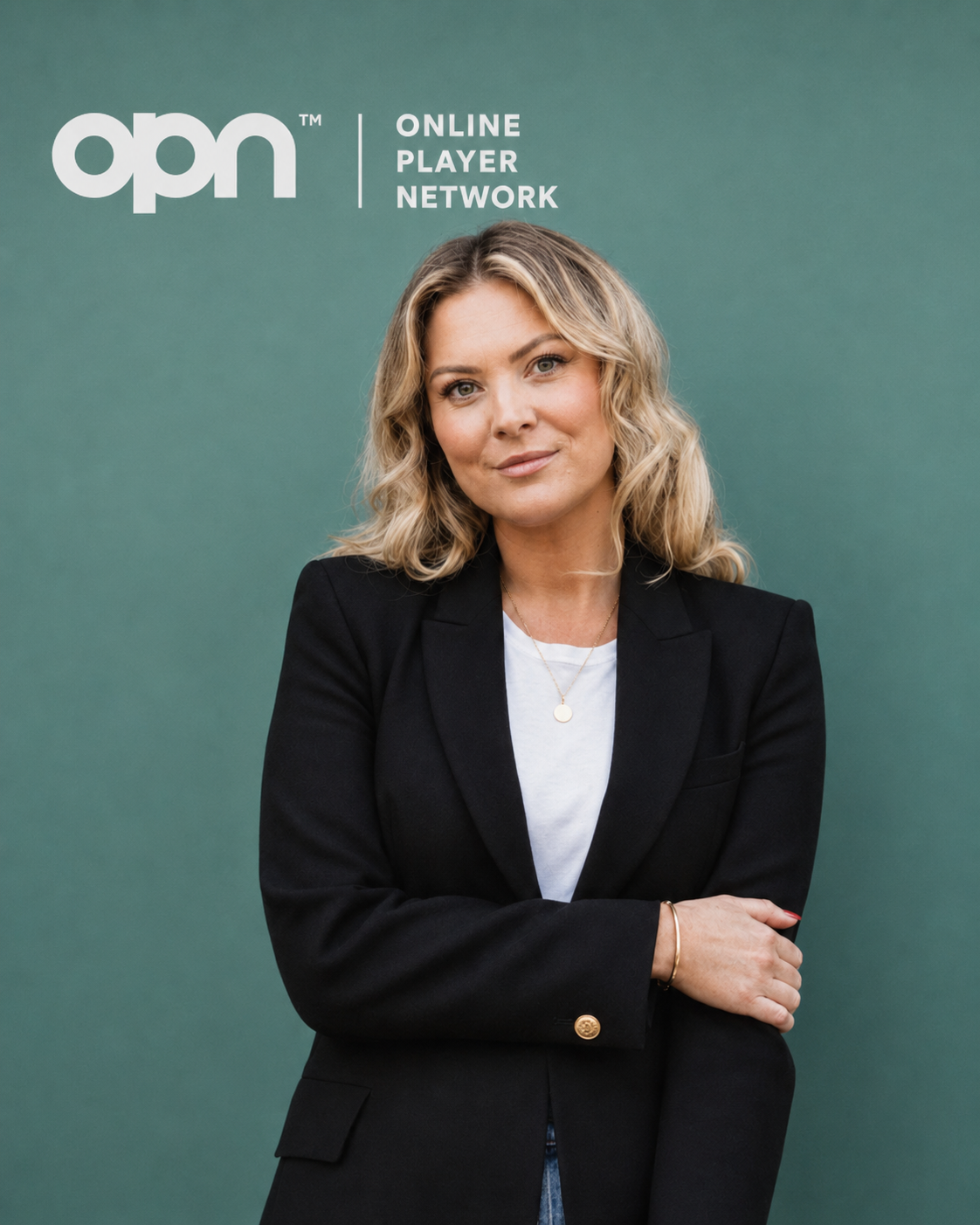
OPN’s answer is a free-to-use athlete management platform built around the Digital Athlete Passport, bringing together performance, medical, wellbeing, GPS, training load and development information in one place.
For Fenton, the point is not technology for its own sake. It is about making football work better.
“Every sport has its own identity, and you have to respect what makes each one unique. But you also need to keep sight of the business as a whole — to step back, look across everything we do and make sure you’re not missing opportunities.
“Coming into the industry as a woman without a traditional sporting background meant I brought a slightly different perspective. In some ways, I had nothing to unlearn. I could ask different questions, look at things with fresh eyes and focus on the bigger picture.”
That distinction matters. Fenton came into sport without the habits that often shape how football organisations operate. She was not conditioned to accept a broken workflow because “that’s how it has always been done”. She could look at the industry differently, and ask the questions others sometimes avoided.
It could have been a disadvantage. Football is still an industry built heavily on trust, familiarity and long-established relationships. For a woman without a traditional sporting background, entering that environment brought obvious challenges.
But Fenton says the absence of inherited assumptions became valuable. She did not have to strip away old habits before asking whether existing systems made sense. Over time, what first felt like a gap became a point of difference.
“Over time I realised it’s probably one of my biggest strengths. You’re supposed to know everything, but I think the reality is actually the opposite. Get comfortable with being uncomfortable.”
That has shaped both her leadership and the company’s product. OPN is not presented as a replacement for expertise. It is designed to give coaches, performance staff, medical teams, recruitment departments and players a shared source of information so they can make better decisions.
The platform’s Digital Athlete Passport has also become part of OPN’s work with the Professional Footballers’ Association, supporting out-of-contract players by giving clubs a clearer view of current performance, readiness and development.
In a sport where a player’s visibility can disappear quickly once a contract ends, that matters. OPN’s proposition is that a player’s evidence should travel with them, rather than being left behind in club systems they can no longer access.
Fenton’s own view of value is equally pragmatic.
“You could have 100% of this company, but 100% of zero value is still zero.”
It is a line she returns to often, not as a slogan but as a business principle. Ownership alone does not build a company. Usage, trust, product-market fit and the right people do.
That thinking has helped shape one of OPN’s most distinctive decisions: the core platform is free to use. In a sports-tech market where data, integrations and performance systems can be prohibitively expensive, OPN’s model is designed to remove barriers for clubs that need better infrastructure but do not have the budgets of the game’s biggest teams.
That gives the company a different position in the football data market. While many providers focus on premium analytics for elite recruitment and performance departments, OPN is trying to make connected athlete data practical and affordable across the professional game.
Fenton is clear, however, that being a founder does not mean pretending to know everything. That admission sits at the centre of how she talks about leadership. Rather than mask gaps in her own knowledge, she has tried to build a team capable of filling them.
OPN’s founding team includes Aaron Wildig, the former professional footballer whose 15-year playing career included spells at Cardiff City, Shrewsbury Town, Morecambe and Newport County, his brother Toby Wildig, and Tom Fenton.
Aaron brings the lived experience of football. Emily brings the distance to question its systems.
That balance is central to OPN’s identity. It is a company shaped by football experience, but not trapped by football convention.
In the early days, Fenton admits she often undersold her role. She was cautious about being drawn into technical or football-specific detail she did not feel equipped to defend. Over time, that changed.
“I’m definitely a different person now to when we first started.”
The shift has not come from pretending insecurity never existed. It has come from understanding which doubts are useful and which ones can slow a business down.
That willingness to sit with uncertainty has become part of how she leads. It also reflects the reality of building in a market that is changing quickly. Football clubs are under pressure to make better decisions, manage players more carefully and use data more intelligently, but many still operate with fragmented systems and inconsistent workflows.
OPN’s bet is that the next stage of football technology will not be about producing more data. It will be about making existing data usable, affordable and connected.
Fenton is due to speak at the Entrepreneurs Festival in Leeds later this year, who count Dragon’s Den investor Sara Davies amongst their ambassadors. It is a significant platform for someone who once saw her outsider status as something to overcome.
Now, it feels more like the reason OPN exists at all.
Football may not have given Fenton a playbook. That may be why she has been able to help write a different one.