
Calacus Sports Comms Monthly – Emma Finucane
Every month we look at the best and worst communicators in the sports world from the last few weeks.
EMMA FINUCANE
Emma Finucane left Glasgow 2026 with four gold medals, a place in Commonwealth Games history and a growing claim to be one of the most valuable young ambassadors in British sport.
The 23-year-old Welsh sprinter became the first sprint cyclist to win four gold medals at a single Commonwealth Games, but the case for Finucane as a role model extends well beyond what happened inside the velodrome.
She has increasingly spoken about wanting to use her profile deliberately, particularly to make cycling appear more accessible to young girls who might otherwise struggle to imagine themselves in the sport.
Finucane had the likes of Dame Laura Kenny to look up to when she was growing up and said of her ambitions away from racing: “I want to maybe do a few school talks inspiring girls to get into the sport, and some [experience] days to help girls get into the sport, or anyone trying to get on the track.
“I’m really grateful to have those role models who clearly know what they’re talking about and who have done the work for the next generation. Maybe I can do things for the next generation after me. There are a few things I want to achieve this year, not only on the bike, but off it.”
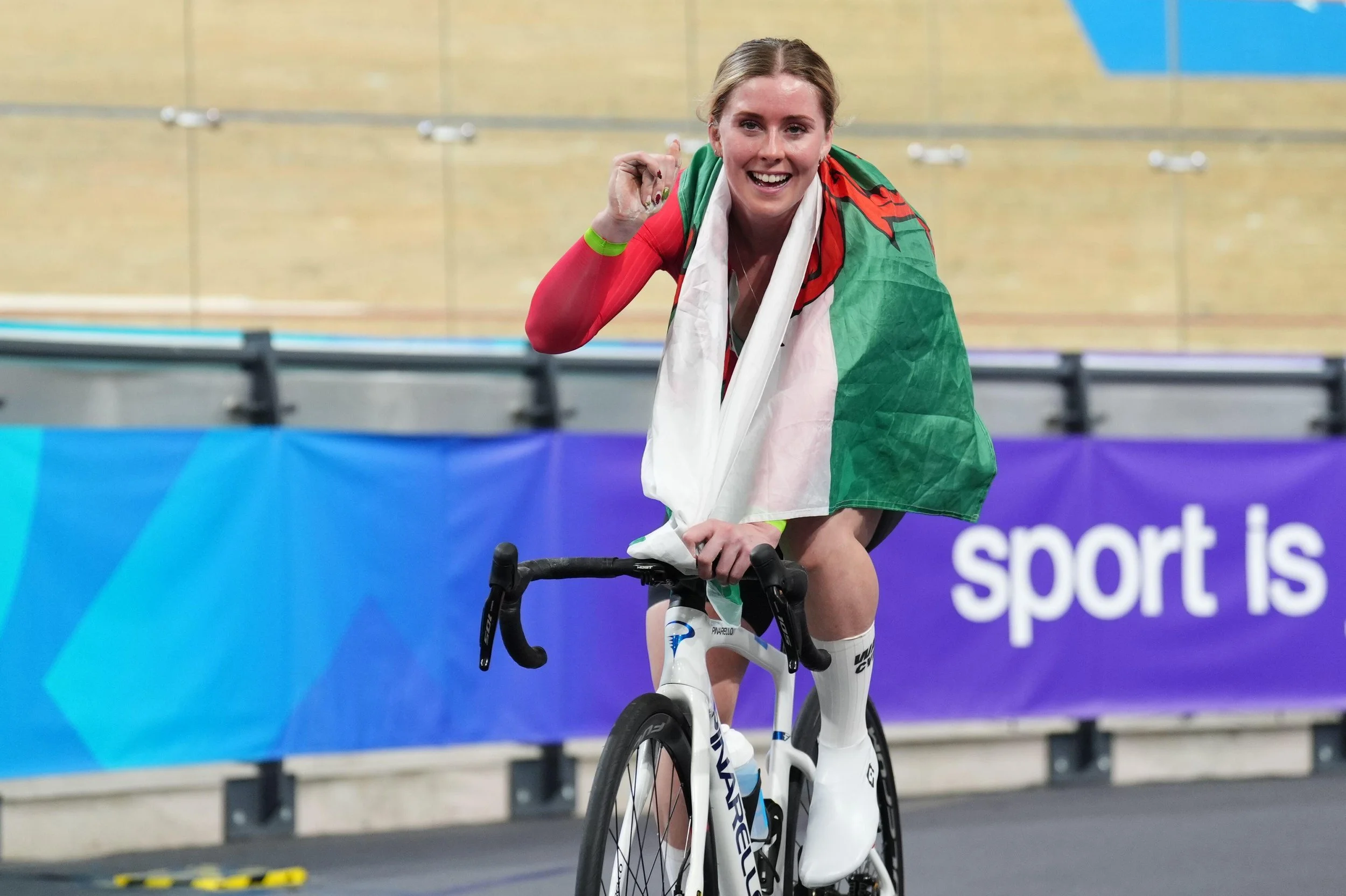
She has also spoken about wanting to create opportunities for girls to experience track cycling themselves, rather than simply watching elite athletes from a distance, and how body image plays such a huge part in women’s sport.
She added: “I had role models like Victoria Pendleton but nowadays athletes have their platforms. Emily Campbell [the British weightlifter] has spoken a lot about body image and it’s incredible.
“Teenagers want to fit in. I was like that. I didn’t want to look different and have bigger legs because I was embarrassed. But now I use my legs for what I do on the track. Every girl looks different as an athlete. Having those female role models nowadays is incredible and I just want it to keep going.”
It gives her role-model message a credibility that is difficult to manufacture. Finucane is not retrospectively attaching an inspirational narrative to success. She can remember being the young girl who did not fully understand where the sport could take her.
Her interaction with young supporters also reveals another part of her appeal.
After a meet-and-greet alongside Sophie Capewell, Finucane reflected on the attention she was receiving: “I’m just a normal girl from Carmarthen who races her bike, but I want to inspire young girls.”
She doesn’t speak like an athlete who has been extensively media-trained into removing personality from every answer. Her language is straightforward, emotional and frequently self-deprecating, while still carrying a clear message.
There is also vulnerability in the way she communicates.
Finucane has talked openly about the psychological demands of elite sprinting, including crying before races and learning how to manage the intensity surrounding major championships.
In an earlier interview, she described the mental component of sprinting: “The physical side is the easy bit. I reckon it’s 80% mental.
“I cried every day at the (Olympic) Games. It was actually a lot worse than I've ever experienced. “I deem myself to be headstrong. I feel like I'm pretty switched on and know what I want.
“But the Olympics brought out a side of me that I've never seen. My coach was like ‘Emma, why do you keep crying?’ and I just explained that this was how I was going to get through the next seven days. My physio was basically my psychologist. I’d go away, speak to her and obviously it’s better to cry and let it out before racing your bike.”
That willingness to the mental side is important for younger athletes because it removes the suggestion that champions simply possess an innate immunity to fear.
Finucane instead talks about confidence as something that has to be developed. She’s been similarly candid about balancing sporting ambition with a broader sense of identity. Rather than presenting Los Angeles 2028 as an all-consuming destination, she has spoken about wanting more freedom and recognising that athletes need something outside competition.
She was the first British female Olympian to win three medals at a single Olympic Games since 1964 when she helped power Britain to team sprint gold and won bronze in the individual keirin and sprint in Paris in 2024.
That openness strengthens her usefulness as a communicator. “It’s important to have that balance,” she said when discussing life between Olympic cycles.
Sports organisations and sponsors increasingly need athletes who can do more than perform. They need personalities capable of speaking naturally to broadcasters, children, supporters, commercial partners and social audiences without dramatically changing voice between each setting.
Finucane already appears unusually comfortable doing that. Her Commonwealth Games performance has now given those messages an even larger platform.
After completing her four-gold sweep, Finucane summed up her relationship with cycling: “I can’t believe I found this sport and this sport found me.”
Her reaction to being chosen as Wales’ flagbearer was similarly instinctive rather than polished.
“I honestly feel like I’m in a dream,” she said, before talking about the passion she felt competing for Wales and the belief carried by a relatively small sporting nation.
That emotional fluency is part of the attraction. Finucane can explain what winning feels like, but she can also explain fear, uncertainty, belonging and the strange experience of becoming someone children suddenly ask for photographs and autographs.
Those qualities make her valuable to cycling in a way medals alone cannot.
The four golds from Glasgow will guarantee attention. Finucane’s ability to speak directly and convincingly to the girls watching her may determine what that attention ultimately achieves.
Written by Jess Spillman