
Calacus Monthly Hit & Miss – Liverpool Manager Arne Slot
Every month we look at the best and worst communicators in the sports world from the last few weeks.
ARNE SLOT
There was a flashpoint in the goalless draw between Arsenal and Liverpool at the Emirates in early January that could easily have become a week-long culture-war – the sort of incident that spawns a thousand hot takes, hardens fan tribalism and leaves managers lobbing rhetorical grenades in post-match interviews.
With Arsenal chasing a goal that would extend their lead at the top of the Premier League, current champions Liverpool sat deep and looked to waste time where the opportunities arose.
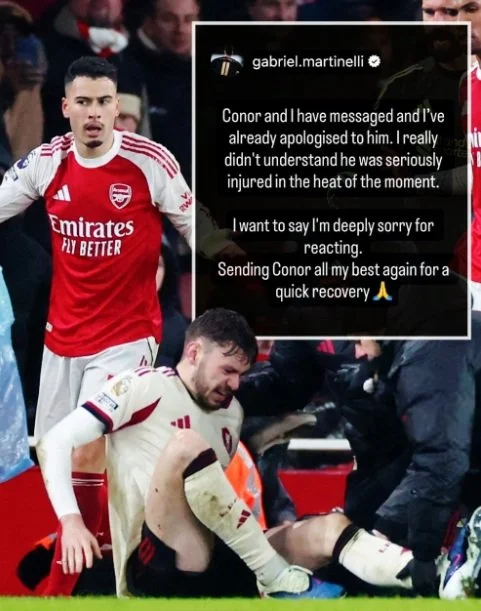
When Reds defender Conor Bradley fell to the ground late on, moving partially back onto the pitch, Liverpool players became incensed when Arsenal winger Gabriel Martinelli tried to move him off the field so that play could continue.
The Brazilian presumed that Bradley was time-wasting rather than seriously injured, as turned out to be the case and it would not have been beyond the realms of football narrative for Liverpool manager Arne Slot to stoke the fires of controversy.
What happened next is why Slot’s reaction was a communications masterclass.
Where some may have been tempted to express outrage, sarcasm, insinuation, or cite the “dark arts,” he chose control.
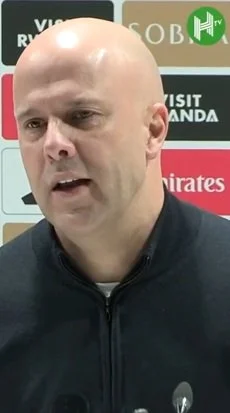
He did not brand Martinelli as cynical, dirty or disrespectful or even pretend to know his character, but gave him the benefit of the doubt.
Slot said: “I don’t know Gabriel Martinelli but he comes across as a nice guy. I think the problem for him is – and that’s the problem in general in football – is that there is so much time-wasting and players pretending they are injured in the final parts of the game or during the game that you can then sometimes be annoyed if you want to score a goal that you think that player is time-wasting.”
It was classic de-escalation, explaining the white-hot conditions that prompted Martinelli’s reaction.
But Slot went further, explaining why incidents like this happen in the first place, and why it’s understandable to react the way Martinelli did.
He added: ““You cannot expect from Martinelli that he thinks so clear in the 94th minute. I am 100 per cent sure if he knew what the injury might be that he would never do that.
“But football, time-wasting, diving has come to the situation that players think in the 94th minute that probably that is happening again.”
That calm approach immediately silenced angry fans somewhat and took the sting out of a story that could have created a greater scandal – at the detriment of Liverpool’s on-field rivals.
Slot then protected his own brand and his club’s identity without using it as a weapon, reminding players and fans that, essentially, Liverpool aren’t a side who roll around to kill time. It was a neat way of praising your own standards without accusing the opponent of lacking them.
Liverpool’s dressing room had every reason to be furious, because the optics were grim and the injury was serious.
Slot still refused to outsource his leadership to social media sentiment, keeping the focus where it belonged, on player welfare and facts. “I don’t know yet but it didn’t look great if you have to go off on a stretcher,” he said, before pointing to scans and uncertainty rather than speculation.
Liverpool later confirmed that Bradley sustained a “significant knee injury” and would undergo surgery, with no timeframe placed on his return at that point.
Martinelli, to his credit, did the next sensible comms step – he apologised quickly, publicly and directly.
In an Instagram post he wrote: “Conor and I have messaged and I have already apologised to him. I really didn’t understand he was seriously injured in the heat of the moment. I want to say I’m deeply sorry for reacting. Sending Conor all my best again for a quick recovery.”
Martinelli’s statement acknowledged the misunderstanding rather than make excuses and it centres the injured player.
The key phrase is “in the heat of the moment” – not as a get-out clause, but as a context marker that aligns with Slot’s framing of late-game emotional decision-making.
Mikel Arteta’s defence of Martinelli also mirrored the same principle – assume human error before assuming harm. Arteta said: “Knowing Gabi, he’s an incredible, lovely guy, and he probably didn’t realise what happened.
“I hope that Conor is well, I will have a word with him to understand that. Probably (Martinelli) didn’t recognise what happened.”
That line “probably didn’t realise” lets the story end. Without it, everyone is trapped: Arsenal can’t apologise without admitting intent, Liverpool can’t move on without looking weak, and the discourse spirals. With it, both clubs can step away without losing face.
Pundit Gary Neville was less measured, predictably. He described Martinelli’s actions in blunt terms, saying: “You can't push him off the pitch! I am surprised one of the Liverpool players have not gone over and had a right pop at him. I think an apology is needed.
“He's thrown the ball at him as well. That is no good. I am actually fuming with Martinelli. I don't know how the Liverpool players didn't go over and absolutely whack him to be honest with you and take a red card. Absolutely disgraceful, that.”
Daniel Sturridge took a similar line on the need for player-to-player respect when someone is down injured. Those reactions are understandable television – but they also illustrate why Slot’s approach is so valuable.
Pundit outrage is designed to extend the conversation and gain clicks, while a manager’s job is usually the opposite: protect players, protect relationships, and keep the next week from being swallowed by yesterday’s clip.
Notably, there were more than 500 complaints about Neville’s reaction to broadcasting watchdog OFCOM.
The aftermath underlines why the temperature mattered. Liverpool confirmed Bradley would have surgery, and Bradley later posted his own update after the operation, saying: “A big blow but surgery is done so the comeback starts now.
“It won’t be for a little while but I already can’t wait to get back playing for Liverpool FC and Northern Ireland. Thanks for all the support.”
That context turned the Martinelli moment from “gamesmanship debate” into something more serious – and it also shows why Slot’s restraint was the right call.
When injuries escalate, yesterday’s hot take can look grotesque fast. Slot avoided creating a situation where anyone felt they had to “win” the narrative at the expense of basic decency.
The comms lesson travels well beyond football – when a controversy is emotionally easy, slow it down, humanise the opponent, and keep the focus on the person harmed rather than the enemy you could manufacture.
Slot didn’t just defend Martinelli, he reminded fans and pundits alike that modern football has trained players to doubt what they are seeing.
His actions lowered the risk of escalation, and made it possible for the story to conclude with an apology and a recovery message – not a feud.