
Calacus Monthly Hit & Miss – Red Bull's Max Verstappen
Every month we look at the best and worst communicators in the sports world from the last few weeks.
MAX VERSTAPPEN
There are very few instances when it provides any positive benefits to control who can or cannot attend a media event –and banning journalists because you don’t like them or they have offended you should always be a last resort.
When Max Verstappen refused to begin a scheduled media session ahead of the Japanese Grand Prix until a Guardian journalist, Giles Richards, left the room, the move reignited debate about access control in Formula One and the ability of the sport’s biggest stars to shape the coverage around them.
Accounts from the Suzuka paddock describe Verstappen sitting down, pausing proceedings and insisting he would not speak until Richards departed, after which the session continued as normal.
Verstappen had taken offence to Richards’ questions in Abu Dhabi at the end of last season when he asked whether an incident with Mercedes driver George Russell was a cause of regret, given the deduction in points was the difference between winning the Drivers’ Championship and finishing second to Lando Norris. He refused to continue the press conference until Richards departed.
Richards later published a first-person account in the Guardian describing being blindsided by the ultimatum and removed despite holding standard accreditation for the session.
On one level, it is a driver throwing his weight around after a bruising season and a question he perceived as disrespectful while on a more important level, it is a case study in how fragile F1’s media entourage can become when access is treated as a personal bargaining chip rather than a regulated, competition-owned working environment.
Official media sessions are supposed to operate under neutral rules set by the FIA, Formula One Management and event organisers, not the preferences of an athlete who objects to a line of questioning weeks or months earlier.
If drivers can decide which accredited journalists may be present, the sport creates a structure where only ‘safe’ questions that may not tell an interesting story ensure access.
For teams and the sport’s commercial partners, the knock-on effect to reputation can damage content creation, where predictable media access, be that press conferences, mixed zones, pen sessions, post-session broadcast hits, sponsor-driven digital content and owned-platform distribution are integral for both the competition and commercial partners.
Controlled access is bad for a sport that has positioned itself as more open and modern since its media-rights expansion, documentary success and push into new audiences.
From a crisis communications perspective, the issue is not only what happened but how quickly it becomes a narrative of control versus accountability.
The headline moves from the sport to “Journalist punished for asking questions” regardless of the nuances, that damages both Red Bull and F1 at a time when both sell themselves on professionalism, governance and a premium brand experience.
Media operations sit at the intersection of team PR, F1’s comms, FIA’s regulatory comms, race promoter obligations, and the commercial requirements of broadcasters and sponsors that buy access and usable quotes.
Verstappen’s supporters will argue this is simply a professional boundary, and that the Abu Dhabi question was asked with bad intent and claims he felt mocked, and as an individual he has a right to set limits on how he is treated.
But F1’s press conferences are not private interviews, they are an official working arena created precisely because the sport needs scrutiny, record quotes, and a controlled environment where questions are asked on the record rather than through leaks, anonymous briefings and social media pile-ons.
If a driver thinks a journalist acted unprofessionally, there are established routes: complain to the FIA communications team, request a review under published conduct standards, seek correction if a report is wrong, or challenge the premise in the room with facts and context. Removing the journalist is a shortcut that shifts punishment onto the reporter rather than into a process.
Richards’ Guardian piece is explicit about this point, describing the question as legitimate and the removal as a concerning precedent, particularly given the abuse and polarisation that can follow these flare-ups online.
The Suzuka episode also lands in a broader pattern: Verstappen has, at various points, used media obligations as leverage to make a point, and he has been unusually direct in criticising journalists and broadcasters he believes are biased or unfair.
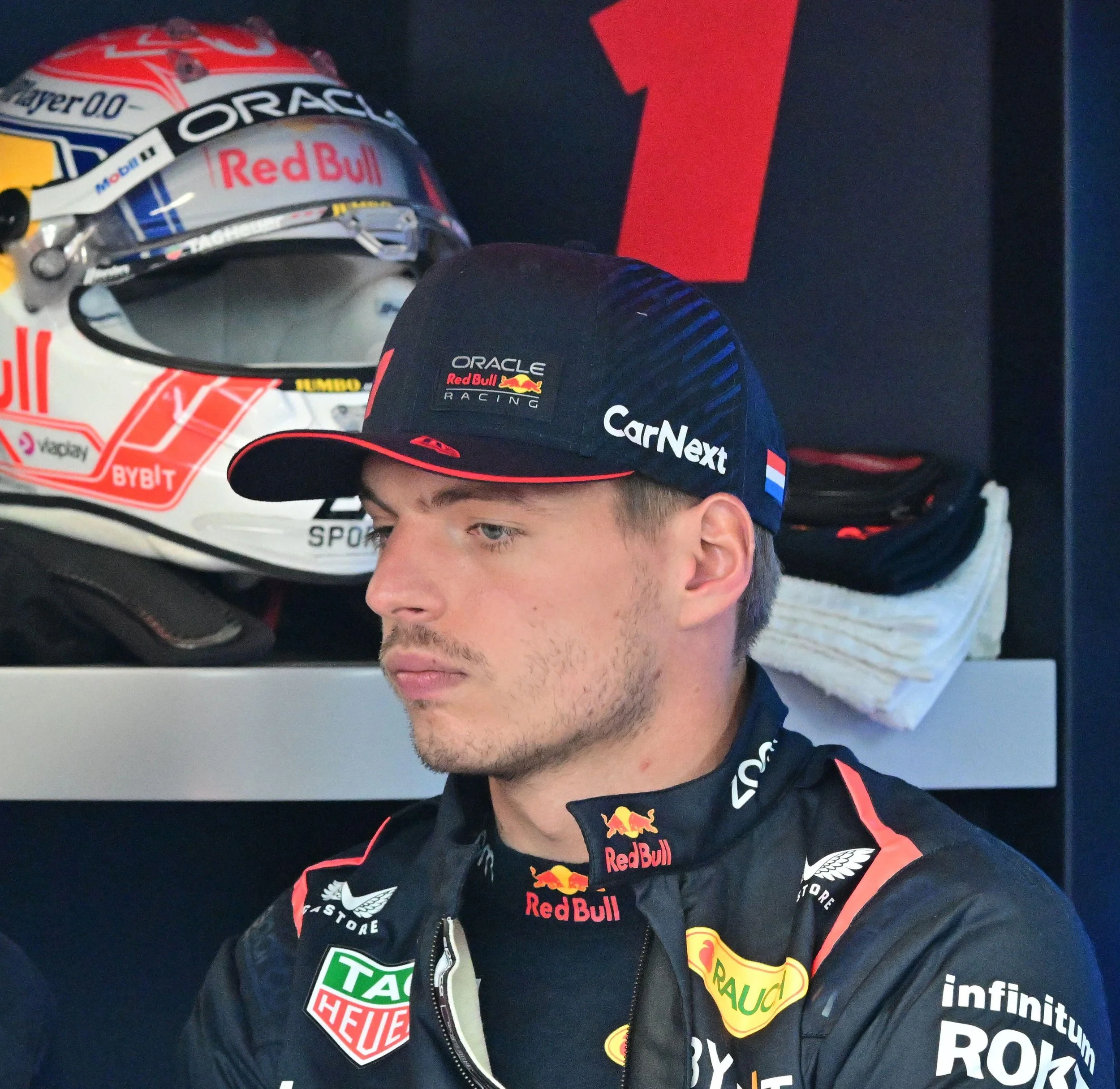
A clear example came in Singapore in 2024, when Verstappen curtailed his answers in an FIA press conference as part of a protest after being sanctioned for swearing, describing the penalty as “ridiculous” and shifted interviews elsewhere, leaving the formal press conference as a hollowed-out product.
Verstappen reportedly told journalists he would prefer questions “outside the room”, which is revealing because it signals a preference for shifting accountability away from the official, on-the-record setting.
The FIA later detailed the “work of public interest” component linked to that episode, underlining that this was not a trivial spat but a formal regulatory dispute that spilled into media operations.
Another well-known clash came in 2022, when Red Bull and Verstappen refused to talk to Sky Sports during a race weekend after the broadcaster’s commentary about the 2021 title decider.
In 2024, Verstappen again publicly took aim at the British press in a post-race press conference setting, questioning their absence after a win and implying selective engagement.
Boycotting a broadcaster is a team media strategy; protesting the FIA is a regulatory dispute; criticising press attendance is gamesmanship. The common thread is the willingness to turn media mechanics into a theatre of control, rather than simply contesting narratives within the normal cut-and-thrust of questioning.
That is why the Suzuka episode feels like an escalation. It is not a refusal to answer one question, or a sharp rebuttal. It is exclusion, executed in real time, over an earlier interaction.
From a governance perspective, it raises a basic question: who runs the room? If a driver can veto accredited media presence, the sport needs to define whether that is acceptable and, if not, what the consequences are.
Governance is where the incident stops being a personality story and becomes a system story. F1 has layered authorities: the FIA sets sporting rules and stewarding; Formula One Management controls the championship’s commercial rights and much of the media infrastructure; promoters deliver events; teams hold significant leverage through their commercial agreements; and drivers are the on-screen product. In that ecosystem, unclear authority creates grey zones, and grey zones create precedent.
Crisis comms teams will recognise the red flag: an unowned issue can bounce between parties until it sticks as perceived negligence. If Red Bull says it is a driver matter, F1 says it is a team matter, and the FIA says it is a promoter or accreditation matter, nobody is accountable. The story then becomes “F1 allows bans” rather than “one driver had a dispute”, and that is a harder reputational problem to extinguish.
There is also a risk to consistency and fairness, which is a core governance principle. If one journalist can be removed at the request of a star, then the working assumption becomes that access depends on relationships. That undermines the integrity of the press conference as a regulated environment and invites calls for formal media protections, union-style representation, or stricter accreditation codes.
F1 already has enough trust and transparency challenges without adding informal access punishments. The sport relies heavily on star power and personality-driven storytelling, and it has a growing list of regulatory and ethical topics that require robust, on-the-record questioning: cost cap enforcement, competitive integrity, safety governance, calendar expansion, geopolitical hosting decisions, and the sport’s relationship with governments and sponsors. Dilute the press conference, and those topics move into less reliable channels.
It is also bad business for drivers, even if it feels satisfying in the moment. Star athletes increasingly build brands that extend beyond the paddock, and those brands depend on credibility with a wide range of stakeholders. A public dispute with a major outlet risks hardening media relationships and creating a narrative of thin-skinned control, which then follows the athlete into every subsequent interaction.
This is avoidable and distracting for Red Bull, undermining global awareness and a positive brand story; it does not benefit from being pulled into a free-press argument where there is no obvious upside. Even if Verstappen believes he is enforcing respect, the external optics can still read as “punishment for scrutiny”, and that framing is uncomfortable terrain for sponsors.
The straightforward remedy would see F1 and the FIA clarifying the operating rules for team and FIA media sessions, including explicit language that accredited journalists cannot be removed at the request of a participant absent a formal decision based on published standards.
If a driver refuses to participate because a journalist is present, the breach should be treated as a failure to meet a media obligation, with sanctions that land on the individual or team, not on the journalist
Clearly the sport needs clearer rules and processes to ensure disputes are judged fairly and according to statutes.
F1’s leadership often talks about professionalism, growth and modernisation but those goals are hard to square with a model where the sport’s biggest star can, effectively, pick who gets to ask questions.
Verstappen does not have to like every question, nor humour every premise, but he does have to accept that official sessions exist to serve the public record, not personal comfort.
That distinction is the difference between a sport confident enough to withstand scrutiny and a sport that quietly trains its media ecosystem to look the other way.