
Calacus Sports Comms Monthly – Sebastian Sawe
Every month we look at the best communicators in the sports world from the last few weeks.
SABASTIAN SAWE & ADIDAS
When Sabastian Sawe crossed the finish line of the London Marathon in 1 hour, 59 minutes and 30 seconds, he became the first human to run a marathon in under two hours.
What followed his performance was not just impactful, but clearly intentional. Sawe held up his shoe, the adidas Adizero Adios Pro Evo 3, for the cameras, with “WR” and “Sub 2” written along the side.
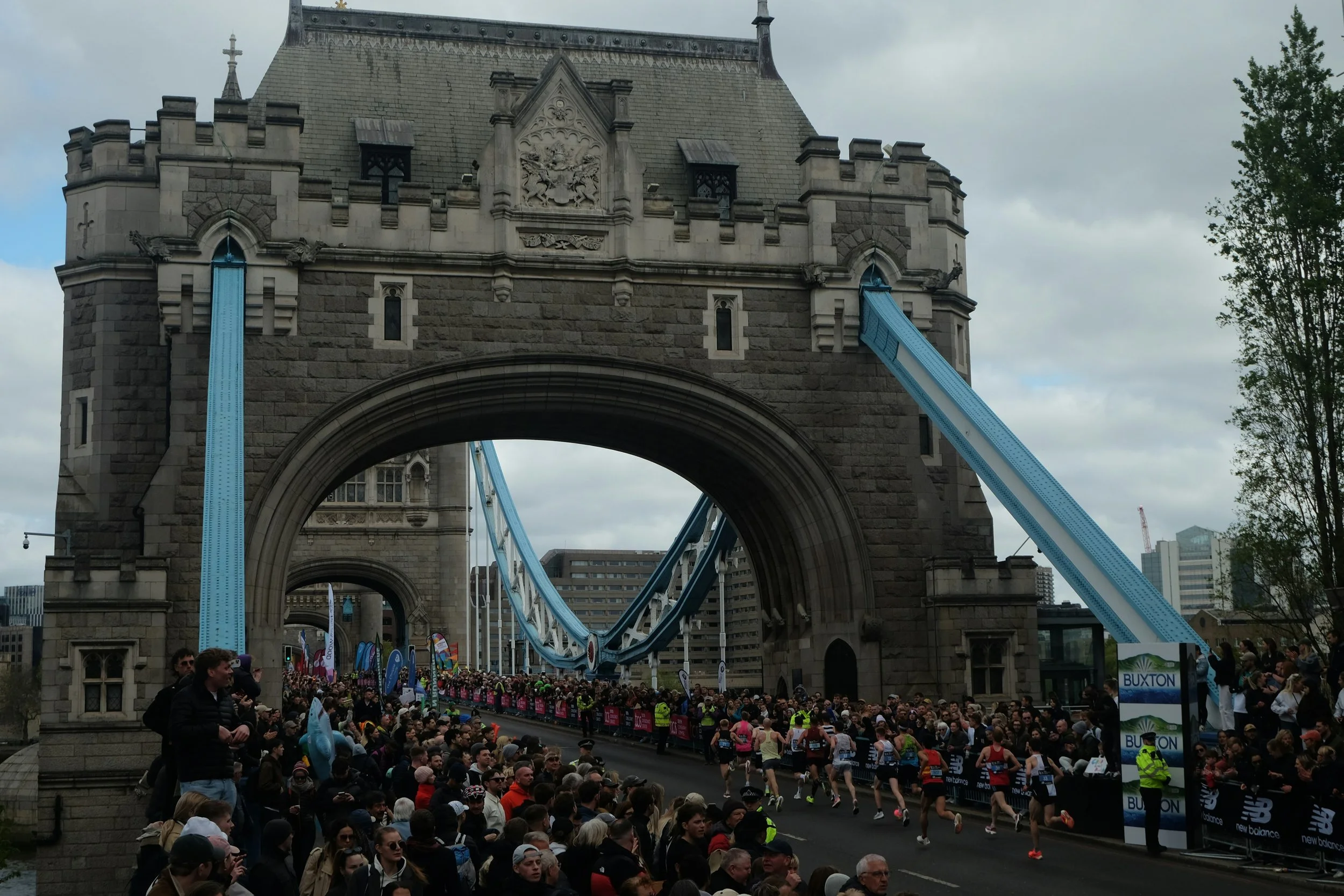
With over 800,000 spectators lining the streets of London and a huge audience watching from around the world, it became a moment of real significance, the kind of image that captured awe and admiration worldwide, a historic milestone that felt bigger than just the race itself.
While Sawe and his team handled everything leading up to and around this moment with precision, it is important to understand why that level of control was necessary from a communications perspective. The significance of the way the moment was dealt with only really becomes clear when you understand who Sawe is, and the scepticism he was running against.
Sport is about moments, achievements and records - but in an era where controversy and scandal sells far more than success, the scrutiny around world records, particularly in a sport where doping has been far more frequent than desired.
The 31 year old Sawe was born and raised in Barsombe, a small village in Kenya’s Uasin Gishu County, set high in the Rift Valley. The region, alongside places like Iten and Eldoret, has produced more distance running records than anywhere else in the world. However, while the conditions are ideal, they do not guarantee success.
Sawe did not begin as a marathoner, but as a middle-distance runner. It was not until 2019 that he ran 5000 meters for the first time, winning in 13:56. His progression accelerated through family connections when his uncle, Ugandan 800m national record holder Abraham Chepkirwok, introduced him to coach Abel Mutai, who was working under Claudio Berardelli in Nandi County. From there, Sawe was set on the path that would eventually lead to his record-breaking performance, with Berardelli becoming his coach.
His transition to long distance was gradual, but the results were immediate. In January 2022, he started as a pacemaker at the Seville Half Marathon, only to continue running and finish in 59:02. By March, he had set a course record at the Rome-Ostia Half Marathon. That September, he broke the Kenyan national record in the one hour run in Brussels, covering 21,250 meters and only just missing the world record. As Sawe made quick improvements, it became clear he was heading towards greater success.
In 2023, he placed seventh at the World Cross Country Championships before winning the half marathon at the World Road Running Championships in Riga. In 2024, he ran 58:05 to win the Copenhagen Half Marathon, setting a personal best. Then, in December 2024, he made his marathon debut in Valencia, running 2:02:05, the second fastest debut in history. He followed that with a win at the 2025 London Marathon in 2:02:16. In just a few years, Sawe had entered four elite marathons and won all four, so naturally people started paying close attention.
As his performances improved, attention shifted and it was no longer just about his times but also about gaining the trust of the running world. Kenya has more than 140 athletes currently banned by the Athletics Integrity Unit (AIU) for doping offences since the 2016 Rio Olympics, and the World Anti-Doping Agency has declared the country non-compliant. When a relatively unknown runner debuted at 2:02 and won Berlin, the achievement drew attention but also raised questions within the running community.
The questioning and scepticism was only fed by the fact that his coach, Berardelli, had previously worked with athletes who had been banned. While the scepticism was unfortunate, it was not unreasonable but rather it was a predictable response shaped by the sport’s history. Therefore, for Sawe, winning races was not enough, he also had to earn trust and that is where the communications approach became most important.
Sawe didn’t let rumour and suspicion dominate the agenda, he and the adidas team took a proactive approach to doping concerns.
Rather than waiting for scrutiny, Sawe approached the Athletics Integrity Unit and requested as much testing as possible. This was not reactive but instead an intentional governance and communications decision meant to remove doubt before it could form publicly. In the two months before the Berlin Marathon alone, he underwent 25 unannounced out-of-competition tests. adidas, his sponsor, went further by investing $50,000 annually to fund additional testing. Through blood samples, urine tests, and multiple checks in a single day, Sawe made it clear that he had nothing to hide.
When it comes to communications, Sawe and his team handled the situation perfectly. Rather than reacting to a situation that could damage his reputation as the accusations come in, Sawe and adidas controlled the narrative by stepping forward and dealing with potential criticism before it became a headline. With that, instead of people questioning “is this athlete clean?”, the conversation became “this athlete is doing everything possible to show he is.”
His own words after London reinforced that message: “It shows that Sabastian Sawe is clean. It shows running clean is good, and we can run clean and we can run faster. It keeps the awareness that Sabastian Sawe is not to be doubted, and he is a clean athlete.”
At the same time, Sawe’s adidas partnership played an important role in shaping the communications strategy around him. The partnership was not just marketing. Instead, adidas being tied to his performance and testing helped to strengthen the public's trust in him.
Sawe ran in the Adizero Adios Pro Evo 3, a shoe that takes running trainers to a different level. At just 97 grams, 30% lighter than its original model, with carbon fiber re-engineering and a near translucent upper sole, adidas claims it delivers a 1.6% improvement in running economy. In marathon terms, that is a major advantage and at £450, it is clearly a high-end product.
However, what made the communication work was not the technology, but it was the image. Sawe holding the shoe at the finish line with “WR” and “Sub 2” visible, it captured everything in a single photo from the athlete to the brand, and the moment, which felt authentic, not staged or forced, creating the perfect ideal of what strong sports sponsorship should look like.
adidas General Manager Patrick Nava said: “The adidas family is incredibly proud of Sabastain and Tigst’s historic achievements, marking the fastest times humans have ever run in a marathon. This is a testament to the years of hard work and dedication they have made, alongside our innovation team.”
Between Nava’s statement of athlete first and technology second, Tigst Assefa breaking the women’s-only world record and Yomif Kejelcha also going under two hours on the same day, all in the same shoe, adidas was thriving and the statement only solidified their success and message.
Leading up to significant moments such as this one, athletes can struggle with inconsistency, saying one thing then something slightly different later or simply coming across as too rehearsed. However, Sawe was able to effectively avoid all of that.
After the race, he added: “I think I've made history today in London, and for the new generation it shows that to run a record is possible...it depends on the preparation you had and the discipline you had...nothing is impossible (notably a play on an adidas slogan).
“I was well prepared for this year’s London Marathon, but what comes surprised me.” None of what Sawe said feels overworked but rather down to earth and consistent with how he comes across, always sounding like himself.
Not only did his own statements shape this moment but outside voices, as well. Eliud Kipchoge, two-time Olympic marathon champion, shared his congratulations: “Breaking the sub-two-hour barrier in the marathon has long been a dream for runners everywhere, and today you've made that dream come true."
Former women's world record holder Paula Radcliffe added: "We've witnessed history being made, but it is more than that. It is an iconic barrier that there has been this discussion over for a long time about whether it is even possible."
Sawe and his partnership with adidas works well because of planning and communications strategy as well as sporting excellence. The anti-doping approach was proactive rather than reactive, the messaging stayed consistent with who Sawe is rather than trying to make him something he is not, while the external validation from the testing and other athletes did more than any formal statement could have done.
Today, people are quick to question and stories can change within a moment. However, Sawe’s team understood this, which allowed them to further understand that gaining trust isn’t just done on race day. It comes from everything beforehand from the testing to the training, and the consistency in how you show up.
Sometimes in communication, rather than explaining yourself or addressing an issue directly, your best interest may be to prove yourself through your actions.
In Sawe’s case, the doping testing was the correct move to make. While his record may not last forever, the record-breaking moment certainly will.
In a world where trust is fragile, where athletic achievements must be underpinned by integrity, Sawe and the adidas team got everything right.
Editorial support: Kendyl Morgenstern