
Calacus Sports Comms Monthly – English Football League
Every month we look at the best communicators in the sports world from the last month.
THE ENGLISH FOOTBALL LEAGUE (EFL)
The EFL faced one of the most complex integrity tests in recent English football history during the Championship play-offs – and navigated the Southampton spygate scandal with notable speed, discipline and authority.
What began as a promotion shootout involving Southampton, Middlesbrough, Hull City and Millwall quickly became a governance crisis with sporting, legal, financial and reputational consequences.
The Championship play-off final is often described as the richest game in football, with promotion to the Premier League carrying a value of around £200 million, so any decision affecting who should be allowed to contest that match was always going to be scrutinised intensely.
The controversy emerged during Southampton’s semi-final against Middlesbrough, after the Saints were accused of observing and recording a Boro training session before the first leg at Rockliffe Park.
The EFL moved quickly, charging Southampton on May 8 with breaching its regulations. Reacting quickly meant that the issue would not drift until after the play-offs, the league immediately treating the allegation as a live competition-integrity matter.
Southampton went on to beat Middlesbrough over two legs, setting up what appeared to be a Wembley final against Hull.
But the EFL’s position was clear and consistent: the result on the pitch could not simply override a serious breach of regulations designed to protect fair competition.
On May 14, the league issued an interim update on the Championship play-off final, warning supporters and clubs that disciplinary proceedings could affect the fixture.
That statement didn’t eliminate uncertainty, but gave proper notice that the final was contingent on due process.
Credit to the EFL and its communications team for not hiding behind process until a final ruling arrived. By signalling that the allegations were serious enough to have practical consequences for Wembley, it moved onto the front foot.
Middlesbrough, understandably, argued that Southampton’s conduct went to the heart of sporting integrity and called for Southampton to be removed from the play-offs, saying a sporting sanction was necessary because the misconduct had taken place before a fixture of huge significance.
Although Middlesbrough were not permitted to intervene directly in the EFL proceedings, their public stance underlined the seriousness of the case and the reputational pressure facing the league.
The EFL’s decision to use an Independent Disciplinary Commission was critical, given that the case involved one of the biggest financial prizes in football. The league needed the process to be independent, evidence-led and legally robust.
The commission ultimately found that Southampton had committed admitted breaches relating not only to Middlesbrough in May 2026, but also to fixtures involving Oxford United in December 2025 and Ipswich Town in April 2026, suggesting that rather than a one-off lack of judgement, this was a deliberate trend of the Saints trying to gain an unfair advantage.
The written reasons later described a deliberate plan, with reports that manager Tonda Eckert had authorised the spying scheme.
Southampton were thrown out of the play-offs and given a four-point deduction for the following Championship season while Middlesbrough were reinstated. The decision was announced by the EFL on May 19, just four days before the final.
That timing created obvious disruption, but the EFL had very little room for manoeuvre. A lesser sanction would have invited accusations that financial convenience had trumped integrity. Postponement would have created serious logistical issues for Wembley, broadcasters, supporters, clubs and commercial partners. By acting before the final, the league ensured that the decisive match would not be played under a cloud of unresolved disciplinary doubt.
Southampton’s appeal then became the next major test. The club accepted that sanctions were necessary but argued that expulsion was excessive.
The EFL’s process again held firm. A League Arbitration Panel dismissed Southampton’s appeal on May 20, confirming that the expulsion, four-point deduction and reprimand would stand. Southampton also issued their own club statement confirming they would not participate in the final.
Although the appeal was not a conventional court case, it was a serious legal process involving heavyweight sports-law representation. Blackstone Chambers confirmed that Lord Pannick KC, Kate Gallafent KC and Tom Coates acted for Southampton, while Nick De Marco KC and Rowan Stennett acted for Middlesbrough. That calibre of legal involvement shows how significant the matter had become.
The EFL deserves credit for maintaining a process capable of withstanding that scrutiny and for acting without delay. In football, governing bodies are often accused of improvising under pressure but the league had regulations, an independent commission, an appeal mechanism and a final ruling before the final matchday.
Hull’s position added another layer. The club had prepared for Southampton, then faced Middlesbrough after Boro’s reinstatement.
Owner Acun Ilicali said before the final that Hull would consider legal action if they lost at Wembley, arguing that his club had been placed in an unfair position through no fault of their own.
That threat underlined the impossible balance the EFL had to strike. Southampton had breached the rules, Middlesbrough had been disadvantaged, and Hull were affected by the remedy.
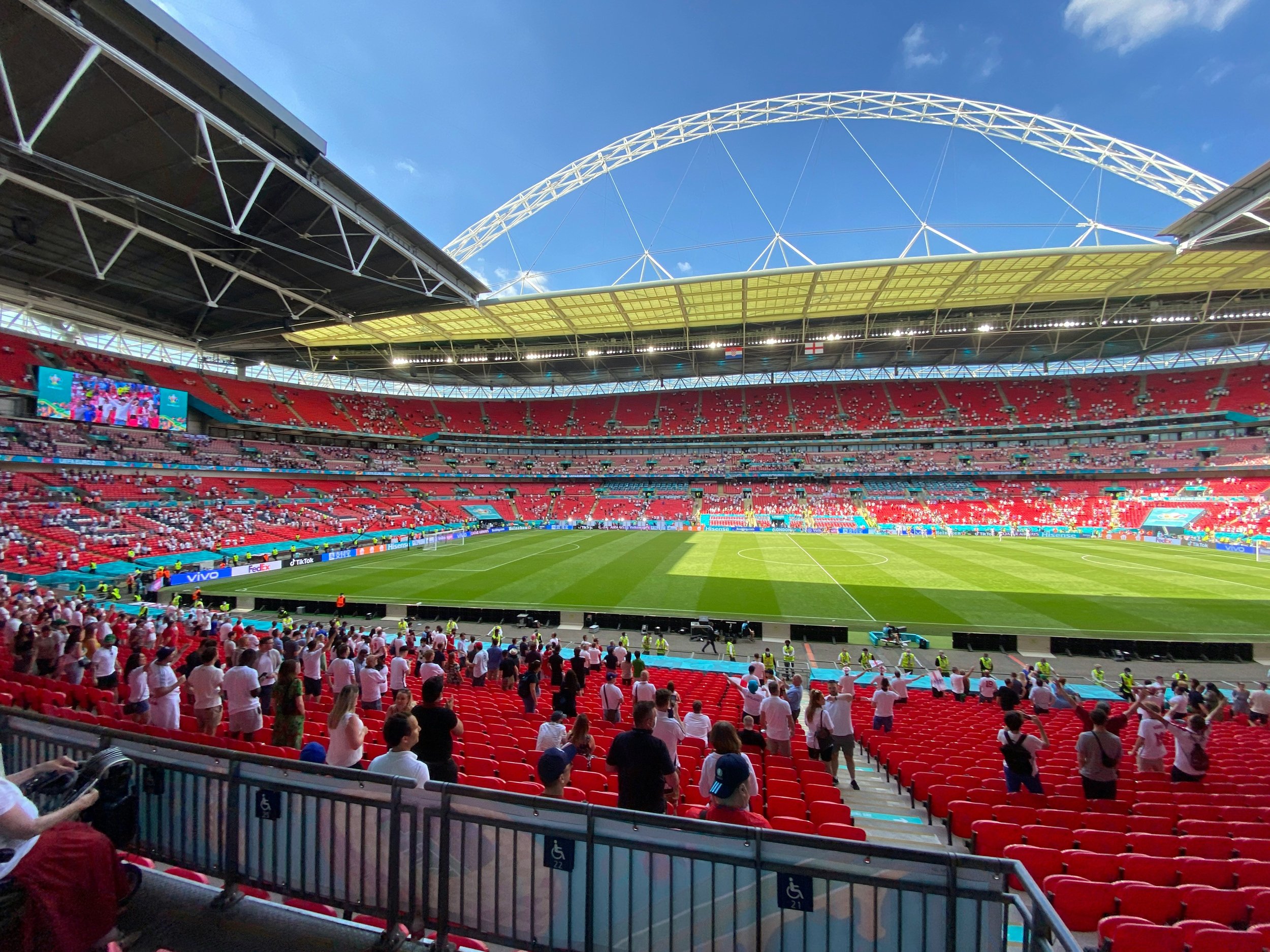
Reinstating Middlesbrough preserved the play-off structure: the semi-final opponent affected by the breach replaced the disqualified club.
Promoting Hull automatically would have punished Middlesbrough for Southampton’s wrongdoing while allowing Southampton to play would have rewarded a club found to have breached the rules. Postponing indefinitely would have multiplied uncertainty. The EFL’s response was the cleanest available option.
The final then gave the EFL the resolution it needed with Hull beating Middlesbrough 1-0 at Wembley, thanks to Oli McBurnie scoring a dramatic late winner to secure promotion to the Premier League.
The result meant the play-offs ended with a clear winner, a completed final and no immediate need for Hull to pursue the threatened legal action. Hull’s victory allowed the EFL to emerge with its competition integrity intact.
There are still lessons to learn.
The EFL could strengthen future guidance around what happens if a play-off finalist are disqualified, how supporter arrangements are handled, and how quickly public explanations are provided. They could also consider clearer pre-season reminders about rules on observing opposition training, particularly given the enormous sums attached to promotion.
But those are refinements, not evidence of failure. The bigger picture is that the EFL protected the principle that the Championship play-offs must be decided within a fair competitive framework.
It did not flinch because the fixture was commercially valuable nor did it allow the prestige of Wembley to dilute the seriousness of the breach, or let the appeal process drag beyond the final.
Southampton’s actions created this scandal.
The EFL’s response prevented it from overwhelming the competition. When football governance could easily have been accused of weakness, delay or compromise, the league acted firmly, followed due process and delivered a legitimate final.
Hull’s victory gave the story its ending, but the EFL’s handling ensured that ending - and the competition - could still be trusted.