
Calacus Sports Comms Monthly – The IOC to pay athlete grants
Every month we look at the best and worst communicators in the sports world from the last few weeks.
KIRSTY COVENTRY ESTABLISHES ATHLETE GRANTS
Kirsty Coventry’s decision to introduce a $10,000 grant for every eligible Olympian represents one of the most significant changes in the financial relationship between the International Olympic Committee and the athletes who make the Games possible.
From the Milano Cortina Winter Olympics onwards, competitors will be able to apply for the IOC’s new ‘Fit for the Future Olympian Grant’, with approximately 14,000 Summer and Winter Olympians expected to qualify during each four-year cycle.
The potential commitment of $140 million per Olympiad is substantial, but the significance of the announcement extends beyond the headline figure.
The payment is universal rather than performance-related. Medal winners and athletes eliminated in the early rounds will be treated equally, reflecting the principle that simply qualifying for the Olympic Games requires years of commitment, sacrifice and elite-level performance.
Athletes will receive the money after the Games, subject to conditions including compliance with anti-doping regulations and the Olympic Charter. The payments are expected to be administered through national Olympic committees.
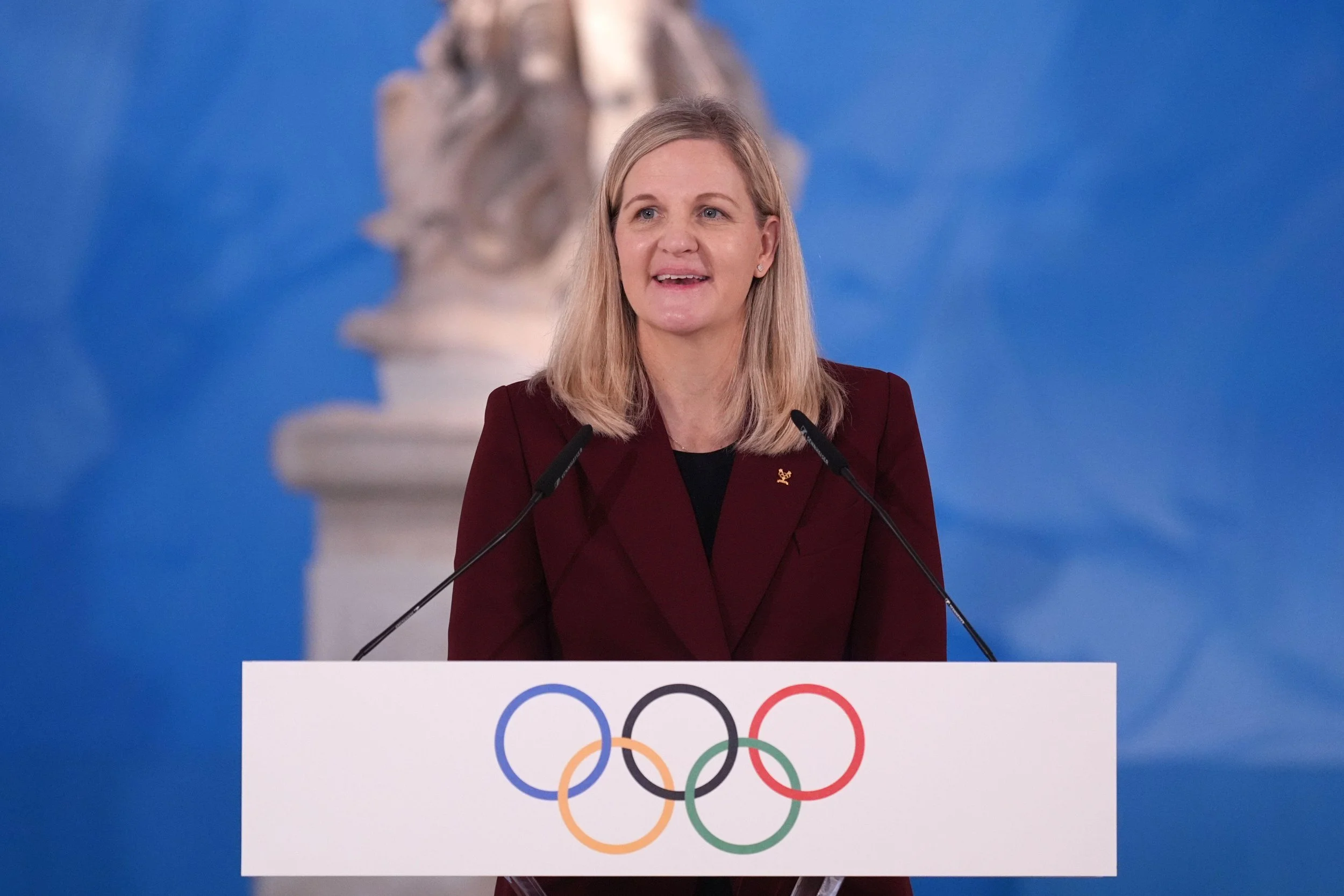
The IOC has been careful to define the money as a grant rather than prize money with Coventry celebrating the launch. She said: “"t has been a topic of conversation for many years, and I am extremely proud that we are now able to do this.
“At the end of our day, we ask ourselves, is this the right thing to do? This is the right thing to do.”
“This is not the end. This is the beginning of this next chapter. We are very clear on the strategic frameworks and the strategies that we want to put in place, and now it’s going to be about implementation.”
Pau Gasol, the former basketball player and chair of the IOC Athletes’ Commission, said the payment recognised the journey and dedication required to become an Olympian rather than rewarding a particular result.
Coventry has consistently argued that Olympic financial support should not be limited to the small proportion of athletes who win medals. Under the new model, competitors from less commercially successful sports and smaller nations will have access to the same payment as the most recognisable stars.
It is an approach that combines symbolic recognition with practical assistance and reflects Coventry’s own experience as an athlete from Zimbabwe who relied on Olympic support to reach the highest level.
The move also marks a decisive break with the Olympic movement’s complicated history of amateurism.
The modern Olympics were established around an ideal of amateur competition inherited from the social values of 19th-century Britain.
Pierre de Coubertin’s vision celebrated athletes competing for honour, character and national pride rather than financial reward. Yet the amateur code was also closely connected to class.
Wealthier athletes could afford to train, travel and compete without being paid. Those who needed to earn an income through sport risked being classified as professionals and excluded.
Few examples illustrate the severity of the system more clearly than Jim Thorpe.
The American was stripped of his pentathlon and decathlon gold medals from the 1912 Stockholm Games after it emerged that he had received modest payments for playing minor-league baseball.
Strict amateurism became increasingly difficult to sustain as governments, sponsors and sporting organisations invested more heavily in elite performance.
Athletes from communist states were officially students, soldiers or state employees, but often trained full-time with extensive government support. Competitors from other countries were required to navigate complicated rules separating legitimate expenses from prohibited earnings.
The contradiction gradually became impossible to defend.
The IOC began relaxing its restrictions during Juan Antonio Samaranch’s presidency and revisited its amateurism rules at the 1981 Olympic Congress in Baden-Baden.
Professional athletes were subsequently admitted in increasing numbers.
Tennis returned to the Olympic programme in 1988, while the appearance of the celebrated United States basketball ‘Dream Team’ at Barcelona 1992 became one of the defining moments in the Games’ transition towards full professionalism.
Formal amateurism largely disappeared, but elements of its culture remained.
Athletes could earn money through professional competitions, national federations, personal sponsorships and government programmes, yet the IOC continued to resist the principle of paying competitors directly for participating in the Games.
Its position was based on the Olympic solidarity model.
Revenue from broadcasting rights, sponsorship and licensing was distributed to organising committees, international federations, national Olympic committees and athlete-development programmes.

The IOC argued that athletes benefited through facilities, coaching, accommodation, travel support, scholarships and investment in the wider sporting system.
That model has helped thousands of athletes, particularly those from nations with limited resources.
Coventry herself has spoken about the role an Olympic scholarship played in enabling her to compete and achieve success for Zimbabwe.
However, pressure continued to build for a more direct and visible connection between Olympic revenue and the athletes whose performances generate the Games’ commercial value.
The announcement followed a difficult earlier episode in Coventry’s IOC presidency when, during a visit to New Zealand in May, she said: “I don’t believe in paying athletes.”
The comments generated a strong reaction from athletes and across social media, with some interpreting her remarks as opposition to any form of direct Olympic payment.
The response reflected the financial pressures faced by many elite competitors, particularly those outside the most lucrative professional sports.
Coventry subsequently clarified that she had been referring specifically to prize money for medal winners rather than broader athlete assistance.
Her argument was that Olympic resources should support the entire athlete pathway rather than benefit only the small number of competitors who reach the podium, with the new grant now clearly recognising every Olympian.
The sequence of events can reasonably be seen as evidence of responsive leadership. Coventry faced criticism, clarified her position and introduced a policy that directly addressed many of the concerns raised by athletes.
The grant does not simply reverse her earlier comments. It translates her stated preference for wider athlete support into a concrete financial programme.
Only a small number of athletes secure major endorsement deals while others receive substantial national funding or compete in commercially successful professional leagues.
Many more combine training with employment, depend on family support or accumulate debt while pursuing qualification.
Even an Olympic medal may provide only a brief commercial opportunity, particularly in less prominent sports, underlining why the new grant will acknowledge that becoming an Olympian has economic as well as sporting value.
The debate may also have been accelerated by Sebastian Coe and World Athletics.
Before Paris 2024, the track and field governing body announced that it would become the first international federation to award prize money at an Olympic Games.
Each gold medallist across the 48 athletics events received $50,000 from a total fund of $2.4 million.
The federation also committed to extending payments to silver and bronze medallists at Los Angeles 2028.
Coe argued that athletes were responsible for making the Games a global spectacle and deserved a direct share of the revenue their performances helped generate.
The announcement was welcomed by many competitors but caused concern elsewhere in the Olympic movement.
The Association of Summer Olympic International Federations said it had not been consulted and warned that putting a financial value on an Olympic gold medal could affect the character of the Games.
Other federations faced a practical problem.
World Athletics has the financial strength to fund Olympic prize money, while smaller governing bodies may not have the resources to offer comparable payments.
That raised the prospect of athletes receiving different rewards depending on the commercial strength of their sport rather than the scale of their achievement.
Coe nevertheless made an important contribution by bringing athlete payment into the centre of Olympic debate. World Athletics demonstrated that direct financial recognition was possible and forced the wider movement to consider how such support should be structured.
Coventry’s model builds on that momentum while taking a different approach.
World Athletics rewards medal-winning performance. The IOC will recognise the achievement of reaching the Games.
The two policies are not necessarily competing philosophies. They can be viewed as complementary parts of an evolving athlete-support system.
A world-class sprinter or thrower may receive a performance reward from World Athletics, while an Olympian in a less commercially powerful discipline will still receive meaningful support from the IOC.
Coe welcomed the IOC announcement as a historic development, and his federation can claim an important role in accelerating the conversation.
Coventry, meanwhile, has broadened the principle beyond athletics and established an inclusive model across the entire Olympic programme.
The strongest argument for the IOC grant is fairness, recognising that every Olympian contributes to the Games and every athlete in every sport deserves the same value.
Broadcasters and sponsors are not purchasing access only to the champions or medal ceremonies. They are investing in the scale, diversity, uncertainty and human stories created by thousands of athletes.
Qualification alone normally requires years of training, travel, coaching, medical support and personal sacrifice.
Under a medal-based system determined by individual federations, athletes in wealthy and commercially successful sports may receive substantial rewards while equally successful competitors elsewhere receive nothing.
Prominent competitors including Australian canoeing champion Jess Fox welcomed the policy, while World Triathlon described it as a landmark initiative supporting all Olympians.
The system also makes Olympic financial support more visible.
The solidarity model has distributed significant resources throughout global sport, but athletes may not always know how much funding reaches them or how decisions are made.
A direct grant creates a clear and identifiable benefit associated with participation in the Games.
The positive response does not mean the programme is free from challenges.
The IOC will need to ensure that payments are administered consistently, transparently and promptly through national Olympic committees.
Strong safeguards will be necessary in countries where sporting governance is weak or where athletes have limited influence over decision-making.
Tax treatment will vary between jurisdictions, and the eligibility conditions will need to be clearly communicated.
The IOC must also explain what happens when athletes face disciplinary proceedings or alleged breaches of the Olympic Charter.
The inclusion of wealthy professional athletes may attract criticism but universality is simple, equal and symbolically powerful, but it does not target support according to financial need.
Gasol has suggested that athletes who do not require the money could donate it, although the central principle remains that every Olympian has earned the same recognition.
There will also be scrutiny over the position of Paralympians.
The IOC and International Paralympic Committee are separate organisations, but the Games are increasingly viewed by audiences, sponsors and host cities as closely linked.
Any major financial difference between Olympic and Paralympic athletes is likely to provoke debate.
More broadly, the grant will not end calls for greater athlete involvement in Olympic financial decisions.
A payment of $10,000 every four years is not the same as a collectively negotiated share of revenue.
Athlete organisations may continue to ask what proportion of Olympic income should be allocated directly to competitors, how that figure should be determined and whether athletes should have a stronger voice in commercial policy.
Those debates are legitimate, but they do not diminish the importance of the initial reform.
Coventry’s decision represents both continuity and change.
It maintains the IOC’s commitment to supporting the athlete pathway and distributing revenue across the global sporting system and at the same time, it accepts that indirect support alone is no longer enough.
Athletes want a clear and direct financial relationship with the Olympic movement, and the IOC has now responded.
The policy is particularly significant because Coventry has chosen an inclusive structure.
She could have followed World Athletics by offering prize money only to champions or medal winners.
Instead, she has introduced a payment that reflects the achievement of becoming an Olympian.
That approach is consistent with her own background.
Coventry competed in swimming, represented a comparatively small Olympic nation and benefited from the support structures that enabled her to train and succeed.
Her reform recognises that many athletes still depend on similar assistance and that direct financial support can sit alongside investment in federations, facilities and development programmes.
Coe and World Athletics deserve credit for accelerating the debate and challenging long-standing assumptions.
Their intervention demonstrated that athlete payment could be introduced without diminishing the prestige of an Olympic title.
Coventry has now taken the next step by creating a model that covers every sport, every nation and every eligible Olympian.
The Olympic movement has spent decades distancing itself from the restrictions of formal amateurism.
The grant represents another important stage in that process.
It acknowledges that athletes can compete for honour, national pride and sporting excellence while also receiving financial recognition for the value they create.
There will be questions about administration, affordability and whether the amount should grow over time.
There will also be continued pressure for athletes to have a greater role in determining how Olympic revenue is distributed.
But the direction of travel is clear. Coventry has listened to the debate, defended the principle of universal rather than medal-based support and delivered a reform with the potential to benefit thousands of athletes.
After more than a century of tension between Olympic ideals and sporting economics, the IOC has accepted that direct payment can strengthen rather than undermine the Games.